


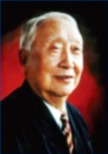
Dr. Huang Peiyun was born in August 1917 in Beijing, with ancestral roots in Fuzhou, Fujian Province.
In 1934, he was admitted to the Department of Chemistry at Tsinghua University as part of its tenth cohort, one of the first classes enrolled after the institution transitioned from a preparatory school for overseas study to a comprehensive university.
In 1935, driven by a strong sense of national responsibility, he took part in the December 9th Movement.
After the Japanese occupation of Beiping in 1937, Tsinghua University relocated to Changsha and, together with Peking University and Nankai University, formed the National Changsha Provisional University. Shortly thereafter, the institutions moved west to Kunming to establish the National Southwestern Associated University.
In February 1938, Dr. Huang joined the “walking group” led by Professors Wen Yiduo and others, serving as a student team leader. Enduring difficult conditions over more than two months, the group walked from Changsha to Kunming. In September of the same year, after graduating from the National Southwestern Associated University, he became a teaching assistant at the Institute of Metals of Tsinghua University, where he engaged in scientific research.
In 1940, he was selected as a publicly funded student for overseas study in the fifth cohort sent by Tsinghua University.
In the autumn of 1941, he traveled to the United States to pursue doctoral studies at the Graduate School of the Massachusetts Institute of Technology
After receiving his Sc.D. in 1945, he remained at MIT to conduct postdoctoral research. His dissertation, On the Forms of Copper in Copper Reverberatory Slags, together with his strong academic performance, earned high praise from his advisor, Professor M. Cohen, who hoped he would remain in the United States.
At the end of 1946, however, guided by his firm commitment to national revitalization, Dr. Huang chose to return to China with his wife, who had already obtained U.S. citizenship, determined to contribute to the country through science and education.
In March 1947, Dr. Huang was appointed Professor and concurrently Chair of the Department of Mining and Metallurgy in the College of Engineering at Wuhan University.
In the winter of 1948, as the People’s Liberation Army prepared to cross the Yangtze River and advance southward, his parents-in-law in the United States, concerned for the couple’s safety, urged them repeatedly by letter and telegram to relocate to the United States. Dr. Huang declined these requests.
In March 1952, he was assigned to Changsha to take part in establishing the Central-South Institute of Mining and Metallurgy. Upon the institute’s founding on 1 November, he served as Professor and concurrently Academic Dean and Vice President.
In 1954, he launched the powder metallurgy programme and was appointed Deputy Director of the Changsha Institute of Mining and Metallurgy of the Chinese Academy of Sciences.
In 1956, Dr. Huang served as a representative metallurgical expert in drafting the 1956-1967 Long-Term National Program for Scientific and Technological Development. In the same year, the Institute of Mining and Metallurgy of the Chinese Academy of Sciences was formally established in Changsha, where he continued to serve as Deputy Director until 1983.
In March 1956, he travelled to Beijing to attend the national meeting on formulating the twelve-year scientific plan.
Dr. Huang joined the Communist Party of China in 1958.
Following the Third Plenary Session of the 11th CPC Central Committee in December 1978, he resumed his role as Vice President of the Central-South Institute of Mining and Metallurgy and concurrently served as Chair of the Academic Committee, overseeing the university’s scientific research.
In May 1979, he founded the institute’s Powder Metallurgy Research Institute and served as its Director.
In 1982, he was elected a delegate to the Twelfth National Congress of the Communist Party of China.
In 1984, he transitioned from administrative duties and became Academic Advisor to the Central South University of Technology.
In 1994, he was elected a founding Academician of the Chinese Academy of Engineering, and in June 1998 he was recognised as one of its first Senior Academicians.
In November 2006, CSU held a ceremony celebrating the sixtieth anniversary of Dr. Huang’s teaching career and his ninetieth birthday.
His Collected Works of Huang Peiyun was published in February 2010.
Dr. Huang passed away in Changsha on 6 February 2012 at the age of ninety-five.
【close】