



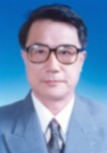
Dr. He Jishan was born on September 1934 in Liuyang County, Hunan Province, with ancestral roots in Xiangxiang County. At the age of six, shortly after completing second grade, he was forced to flee with his parents as a result of the Japanese invasion.
In 1950, he attended Yunlu Middle School in Changsha for one semester but had to withdraw because of financial hardship. Two years later, he worked as a mineral sand inspector at the Xiangdong Tungsten Mine, an experience that set the foundation for his future in geological exploration. Inspired by China’s national call to march toward science and technology, he entered the Department of Geophysical Prospecting at Changchun College of Geology in 1956, majoring in metal geophysical exploration.
After graduating in 1960, he began his academic career in the Department of Geology at the Central-South Institute of Mining and Metallurgy, now CSU.
In 1975, he published his first paper, titled Topographic Correction in Resistivity Methods, which challenged a widely accepted Soviet model. He went on to propose the dual-frequency induced polarization theory and launched the development of dual-frequency IP instruments.
His research on interference elimination in resistivity methods received an award at the 1978 National Science Conference, and his work on problems in the interpretation of direct-current electrical methods earned an Achievement Award from the Ministry of Metallurgy.
Dr. He joined the Communist Party of China in 1981 and advanced through academic positions including Assistant, Lecturer, Associate Professor, Professor, Laboratory Director, Head of the Electrical Prospecting Section, Deputy Chair of the department, and Chair of the department.
In March 1986, at the University of Arizona, he presented the dual-frequency induced polarization method, the focus of more than two decades of research, to an international audience for the first time.
In 1991, he assumed senior leadership roles, serving first as Vice President and later as President of the Central South University of Technology.
Beginning in 1993, Dr. He Jishan received a series of international distinctions. That year, the Cambridge International Biographical Centre in the United Kingdom listed him among “Outstanding Achievers”, the American Biographical Institute named him one of the world’s notable figures, and he was elected a foreign member of the Society of Exploration Geophysicists in the United States.
In 1994, he was elected an Academician of the Chinese Academy of Engineering.
In September 1995, at the repeated invitation of Iran’s Ministry of Mines and Metals, Dr. He travelled to Iran to conduct comparative tests using the dual-frequency induced polarization instruments he had developed. The trials were highly successful, and an Iranian researcher named Yilaz later came to CSU to pursue a doctoral degree under his supervision.
In 1996, Dr. He stepped down as Vice President of the Central South University of Technology and became President of the Hunan Association for Science and Technology. In the years that followed, he focused on translating his major scientific achievements into practical applications.
In 1997, under his guidance, a research team partnered with the Western Hunan Gold Mine on the project Geophysical and Geological Exploration of Deep and Peripheral Zones of the Western Hunan Gold Deposit. The team confirmed reserves sufficient for 34 years of continued gold extraction, 43 years for antimony, and more than 20 years for tungsten, significantly easing the mine’s resource constraints. The following year, Dr. He and several academicians initiated the establishment of the Hunan Academicians Association to provide strategic advice for the province’s economic development.
At the end of 1998, Dr. He and his team travelled to the United Arab Emirates with a geological “CT” instrument of his own design. Within just twenty days, they identified four sites at farms owned by the president, prime minister, and the mayor of Al Ain, where high-quality artesian wells were successfully drilled. Each well produced more than two hundred thousand tonnes of water per day. Their success drew extensive attention across the UAE and earned high recognition from the national leadership.
In early 1999, Dr. He proposed the “flow-field method” and developed the world’s first instrument capable of detecting seepage and piping in dikes and embankments. The Ministry of Education Science and Technology Commission named this project one of the Ten Major Scientific and Technological Advances in Chinese Universities that year.
In the spring of 2000, his research on detecting dike seepage and flood-season piping using the flow-field method made important contributions to national flood-control and disaster-relief efforts. That same year, with support from the Ministry of Science and Technology, the CPC Hunan Provincial Committee, the Hunan Provincial People’s Government, and other relevant departments, he founded the Hunan Geosun Hi-technology Co., Ltd.
In December 2002, the He Jishan Foundation was established to support and reward teachers, students, and staff for contributions in teaching, research, and technological innovation, and to fund scientific and public-benefit projects. Each year, twenty students receive a scholarship of 3,000 yuan. Dr. He also donated 10,000 yuan to establish the Dual-Frequency Induced Polarization Scholarship, encouraging students to contribute to the development of geoscience.
In June 2006, at the 13th General Assembly of CAS Members and the 8th General Assembly of CAE Members, Dr. He was elected Director of the Division of Energy and Mining Engineering of the Chinese Academy of Engineering and received the Sixth Guanghua Engineering Science and Technology Award. In June 2007, he was named an Outstanding Member of the Communist Party of China in Hunan Province. In his later years, he remained committed to contributing to the development of his home province.
Beginning in 2011, Dr. He formulated the concept of Green Energy Development and Utilisation in Hunan and actively advocated for new energy development.
From 2012 to 2013, he led his research team in sampling and analysing biogas resources in the Dongting Lake Basin, with particular attention to shale gas exploration and development in Hunan Province. He proposed the strategic vision of “Gasifying Hunan”, earning him the title “Father of Hunan Shale Gas”.
In March 2016, he was appointed Part-time Professor and Honorary Dean of the College of Earth Science at Guilin University of Technology.
【close】