


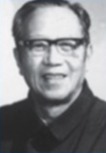
Dr. Chen Xinmin was born on 18 November 1912 in Qingyuan County, Hebei Province (now part of Baoding). Due to frequent family relocations in his early years, he did not attend primary school and instead studied privately, completing the full curriculum on his own before gaining admission to Nankai High School in Tianjin.
In 1931, he entered the Department of Chemical Engineering at Tsinghua University
and graduated with a Bachelor of Science in 1935.
After central China fell to enemy occupation in 1938, he relocated to Lanzhou, where he served as a technician in the Gansu Construction Department and later as an assistant researcher at the Provincial Science and Education Institute.
In late 1939, he travelled to Kunming and joined the Institute of Chemistry of the Academia Sinica, conducting research on urgently needed wartime materials such as lubricants and refined salt.
In 1940, he placed first in metallurgy in Tsinghua University’s competitive examination for government-sponsored overseas study and was awarded the prestigious Lin Sen Scholarship.
The following year, he departed from Kunming via Hong Kong for the United States and began doctoral studies at the Massachusetts Institute of Technology.
He completed his Sc.D. in June 1945 with a dissertation titled The Chromium-Oxygen-Hydrogen Equilibrium in Liquid Iron, which, for the first time, experimentally demonstrated that increasing chromium content in molten iron reduces oxygen activity and that the logarithm of oxygen activity coefficients decreases linearly with chromium concentration.
After returning to China in 1946,
Dr. Chen taught at Tsinghua University and, following a study visit to the Soviet Union and East Germany in 1951, was appointed in November 1952
as the founding President of the newly established Central-South Institute of Mining and Metallurgy.
Wrongly labelled a “rightist” during the 1957 Anti-Rightist campaign, he was rehabilitated in 1959 and later established a new metallurgical physical chemistry programme with a focus on nonferrous metallurgy.
From the late 1970s onward, he edited several influential textbooks, including Physical Chemistry, An Introduction to Metallurgical Thermodynamics, and Physical Chemistry of the Pyrometallurgical Processes.
Elected an Academician of the Chinese Academy of Sciences in 1980, he went on to participate in international metallurgical conferences in Beijing, Hangzhou, Kunming, and Changsha and undertook academic exchanges in the United States and Germany.
Dr. Chen passed away on 23 December 1992 at 22:20, and in accordance with his wishes, the CPC Hunan Provincial Committee posthumously recognised him as a full member of the Communist Party of China.
【close】